
LGBTQIA+ Identity and Mental Health: Understanding the Connection
The connection between LGBTQIA+ identity and mental health is complex. For many LGBTQIA+ individuals, self-discovery and self-expression can be empowering, but they may also come with unique challenges, including discrimination, stigma, social isolation, or barriers to affirming care.
By understanding these challenges and recognizing the importance of inclusive LGBTQIA+ mental health services, families, friends, and communities can help create environments where LGBTQIA+ individuals feel seen, supported, and valued.
Navigating LGBTQIA+ Identities
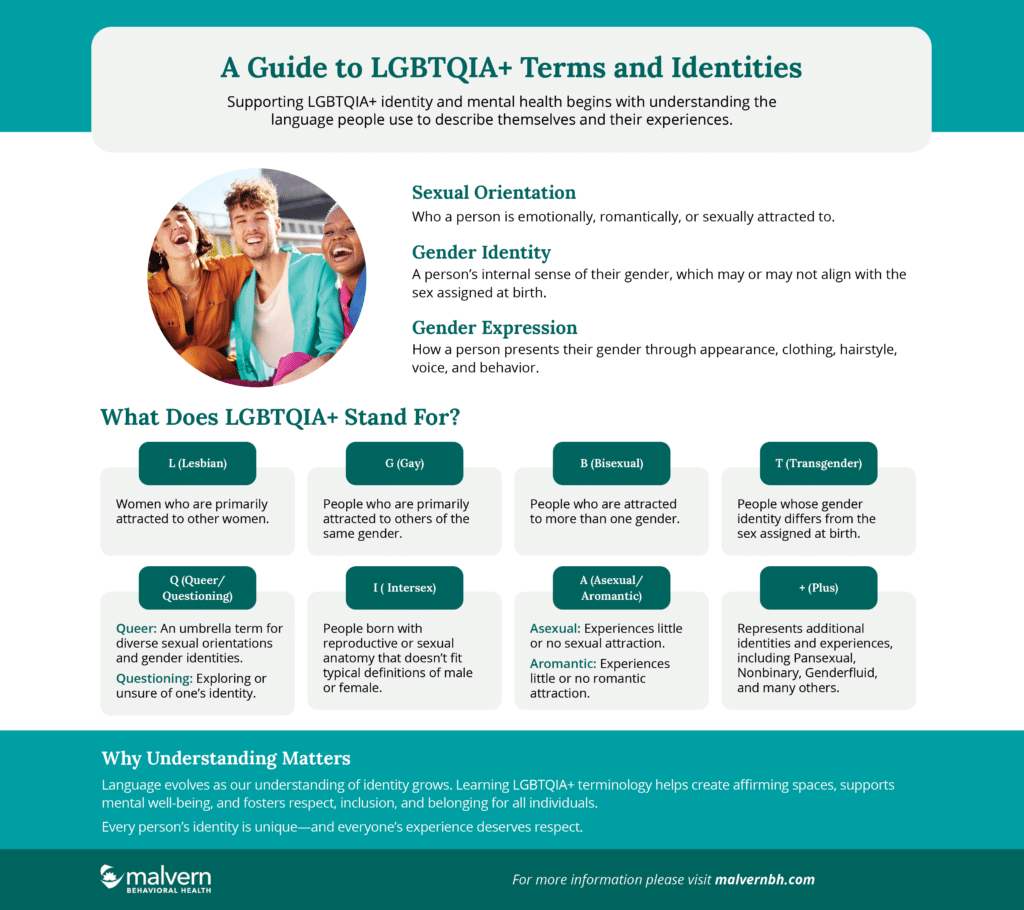
Supporting LGBTQIA+ identity and mental health starts with understanding key terms and phrases within the community. LGBTQIA+ is an expansive acronym representing the diverse spectrum of sexual orientations and gender identities.
- Sexual Orientation: Separate from gender identity and gender expression, sexual orientation is defined as an individual’s sexual identity in relation to the gender to which they are attracted. For example, heterosexual, homosexual, bisexual, or asexual.
- Gender Identity: An individual’s gender identity may or may not correspond with the sex assigned to them at birth. Rather, it is their innate, deeply felt psychological identification as a man, woman, transgender, agender, nonbinary, or other gender.
- Gender Expression/Presentation: The physical manifestation of an individual’s gender identity is their gender expression or presentation. This is how they identify through clothing, hairstyle, voice, body shape, and more. For example, many transgender individuals choose to make their gender expression (how they look) match their gender identity (who they are) rather than their assigned sex at birth.
The acronym LGBTQIA+ has grown over the years as we continue to learn, recognize, and respect the various orientations and identities. The abbreviation itself stands for lesbian, gay, bisexual, transgender, queer/questioning, intersex, asexual, and more:
- L (Lesbian): Women whose primary physical, romantic, and/or emotional attraction is to other women.
- G (Gay): Individuals (frequently men, though used broadly) who are primarily attracted to individuals of the same sex or gender.
- B (Bisexual): Individuals who experience enduring physical, romantic, and/or emotional attraction to more than one gender.
- T (Transgender): An umbrella term for individuals whose gender identity or expression differs from the sex they were assigned at birth.
- Q (Queer/Questioning): Queer is an umbrella term for sexual and gender minorities who are not heterosexual or cisgender. Questioning refers to individuals who are exploring or unsure of their sexual orientation or gender identity.
- I (Intersex): Individuals born with reproductive or sexual anatomy that doesn’t fit the typical definitions of female or male.
- A (Asexual/Aromantic): Asexual refers to individuals who experience little or no sexual attraction to others. Aromantic refers to individuals who experience little or no romantic attraction.
- + (Plus): The plus sign symbolizes the inclusion of other identity terms like Pansexual (attraction to people regardless of gender), and Non-Binary (genders outside the man/woman binary).
Familiarizing ourselves with these terms helps us form a better understanding of how LGBTQIA+ identity and mental health are connected. It’s important to remember that the terminology for sexual orientation and gender identity continues to evolve as language, culture, and society change.
How LGBTQIA+ Identity and Mental Health Are Connected
Our experiences, emotional challenges, and relationships all play key roles in our mental health and well-being. Supportive, healthy, and safe environments build positive self-esteem and identity, while hostile and discouraging environments can slowly break down our confidence and self-love.
This connection is especially true for LGBTQIA+ identity and mental health. According to The Trevor Project, LGBTQIA+ individuals are more likely to experience anxiety, depression, and suicidal ideation due to societal discrimination and lack of acceptance. Additionally, 90% of LGBTQ+ young people said recent anti-LGBTQ+ laws, policies, and debates caused them stress or anxiety. These challenges are often linked to various experiences, which we will explore below.
Minority Stress
Defined as the chronic psychological distress experienced by members of marginalized or stigmatized groups, minority stress is a significant risk factor for LGBTQIA+ individuals. The daily burden of living in a society where they may be exposed to prejudice, discrimination, and violence negatively impacts self-esteem, relationships, and overall mental wellness. Furthermore, the emotional reaction of minority stress can manifest as hypervigilance, emotional exhaustion, dysregulation, depressive symptoms, or suicidality.
External and internal experiences often both shape minority stress. External stressors can include bullying, discrimination, harassment, family rejection, and stigma within communities. Over time, these experiences may contribute to internal stressors as well, such as feeling the need to conceal one’s identity, experiencing shame, constantly monitoring behavior, anticipating rejection or negative treatment, and internalizing negative societal messages. Together, these stressors can have a significant impact on mental, emotional, and physical well-being.
Family and Social Rejection
Acceptance from family, friends, and other members of society plays a key role in everyone’s development as an individual. According to recent findings, LGBTQIA+ individuals are coming out nearly a decade earlier than LGBTQIA+ seniors.
For those who are not in supportive environments, this can have negative effects on their mental health and well-being, increasing the risk of suicide and victimization.
Harassment and Trauma
A survey from the Center for American Progress found that the LGBTQIA+ community experiences higher rates of discrimination than their cisgender and heterosexual peers across multiple environments, such as health care, employment, housing, and school settings.
Ongoing exposure to homophobia, biphobia, transphobia, bullying, and feeling identity-based shame can be a traumatic experience and increases the likelihood of developing mental health conditions like anxiety and depression.
The Importance of Support for LGBTQIA+ Youth
Early support for LGBTQIA+ youth can significantly improve long-term mental health outcomes and foster stronger self-esteem. When family and friends affirm their identity early, they help protect young LGBTQIA+ individuals from the negative impacts of discrimination and rejection.
This allows them to create a safe, stable environment for LGBTQIA+ youth to develop both emotionally and socially. Some key benefits of early support for LGBTQIA+ youth include:
Improved Mental Health
Rates of depression, anxiety, and suicidal ideation are significantly lowered when LGBTQIA+ individuals feel affirmed, accepted, and safe.
Reduced Suicide Risk
Research shows that highly rejected LGBTQIA+ youth are more likely to attempt suicide compared to those who have strong support from family, friends, and other communities.
Decreased Substance Abuse
Supportive home environments and early support lower the risk of LGBTQIA+ youth turning to drugs or alcohol to cope with discrimination, stigma, and trauma.
Stronger Resilience
With affirming mental health resources and support, LGBTQIA+ youth are more likely to achieve higher educational attainment, maintain stable employment, and build stronger resilience in adulthood.

3 Ways to Support LGBTQIA+ Identity and Mental Health
Supporting LGBTQIA+ identity and mental health starts with ensuring they feel seen, valued, and accepted. Whether at home, in school, at work, or within the community, small actions can make all the difference.
1. Stay Educated and Informed
Taking time to understand LGBTQIA+ identities, experiences, and challenges goes a long way in becoming an ally to those within the community. Being aware of current issues or legislation that are affecting their communities can help you better support their mental health and well-being while also empathizing with their experiences.
Furthermore, learning about the unique mental health risks LGBTQIA+ individuals face and the warning signs gives you the tools you need to support them in finding the affirming mental health resources and care they need and deserve.
2. Listen Actively and Respect Their Identity
Gender identity is fluid and can therefore change and evolve. This becomes especially true for adolescents and young adults as they continue to explore and accept who they are. Recognizing and affirming these identities helps individuals feel validated in their experiences and safe accessing appropriate care.
You can do this by using their chosen gender pronouns, communicating openly, and listening to their experiences and concerns without judgment. Ensure they know you hear them, support them, and love them unconditionally.
3. Create a Safe and Accepting Environment
There are many ways to create a safe environment for LGBTQIA+ individuals, from helping them find affirming mental health resources to engaging in open conversations about orientation and identity.
By becoming an advocate for equality, you show LGBTQIA+ individuals they are not alone in trying to create a safer world for themselves and other gender minorities. Challenging homophobic or transphobic remarks and calling out stereotypes and harassment help shift societal attitudes and promote acceptance.
Keep in mind, your safety and the safety of others should always be the number one priority.
If you or someone you know finds themselves in a situation where you feel unsafe, contact the appropriate authorities immediately and calmly remove yourself from the situation.
Seeking affirming LGBTQIA+ mental health services? Explore our Wisteria Program today and contact our team to learn more about how we can help.