


Suicide Prevention Resources: Recognizing Warning Signs & Finding Support
September is Suicide Prevention Awareness Month, an opportunity to raise awareness, reduce stigma, encourage conversations about mental health, and share suicide prevention resources with people who may need help.
While awareness and suicide prevention resources are highlighted during September, recognizing warning signs and knowing how to access support are essential year-round.
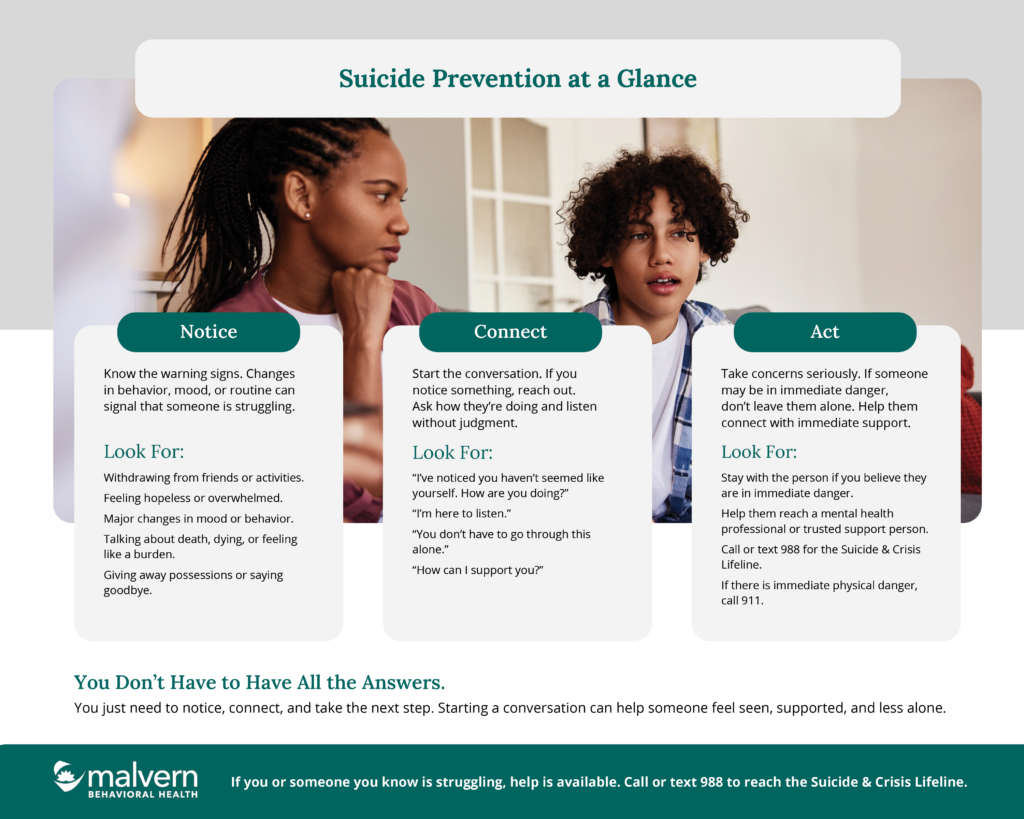
Warning Signs of Suicidal Ideation in Adults
The warning signs of suicidal ideation in adults can appear as changes in a person’s emotions, behavior, relationships, or daily routines. Some signs may be subtle, while others may be more direct. Potential warning signs include:
- Talking about wanting to die or feeling that life is not worth living.
- Expressing hopelessness, helplessness, or feeling trapped.
- Talking about being a burden to others.
- Withdrawing from friends, family, or activities.
- Significant changes in mood or behavior.
- Increased use of alcohol or other substances.
- Giving away important possessions or putting personal affairs in order.
- Engaging in unusually risky or reckless behavior.
- Searching for information related to suicide or developing a plan.
- Experiencing unbearable emotional or physical pain.
Mental health professionals advise individuals to pay particular attention when a behavior is new, becomes more frequent or intense, or follows a painful event, significant loss, or major life changes.
If you notice these signs in someone, you do not need to have all the answers. Start by listening, expressing concern, and helping them connect with appropriate support.
Adult Suicide Prevention: How to Help Someone Who May Be Suicidal
Adult suicide prevention often begins with a conversation. Adults experiencing significant stress, depression, anxiety, grief, trauma, substance use, or other mental health challenges may not always feel comfortable asking for help.
Sometimes, individuals worry about being judged or believe they should be able to handle their problems on their own. Being supportive and present can help reduce that sense of isolation. If you are concerned about an adult in your life, you can:
- Start the conversation. Let them know you have noticed they may be struggling and ask how they are doing.
- Listen without judgement. You don’t need to have the right answer. Give them space to talk about what they are experiencing.
- Take concerns seriously. Avoid dismissing changes in mood or behavior as simply stress or a difficult period.
- Encourage professional support. A therapist, psychiatrist, or behavioral health professional can help determine what type of treatment may be appropriate.
- Stay connected. Continued contact can remind someone that they are not alone and that support remains available.
If someone is experiencing suicidal thoughts or emotional distress, the 988 Suicide and Crisis Lifeline is available 24 hours a day, 7 days a week. Call or text 988 for free, confidential crisis support.

Suicide Prevention for College Students
College students face many of the same mental health challenges as adults, while also navigating unique pressures related to academics, finances, relationships, independence, and life after graduation.
According to recent research from the University of Connecticut:
- Suicide is the second leading cause of death among college students.
- Nearly 1,100 suicides are projected to occur on college campuses this year.
- 18- 24-year-olds think about suicide more often than any other age group.
- 1 in 12 U.S. college students has made a suicide plan.
Coursework, employment, caregiving responsibilities, depression, anxiety, and concerns about paying for college are all challenges that make suicide prevention for college students especially important.
How Can You Help a College Student?
Warning signs in college students may look similar to those seen in adults, but they can sometimes be mistaken for typical college stress. Pay attention to significant or persistent changes such as:
- Suddenly withdrawing from friends or campus activities.
- Frequently missing classes or falling significantly behind.
- Major changes in mood, sleep, or behavior.
- Expressing hopelessness or feeling overwhelmed.
- Increased alcohol or substance use.
- Talking about feeling like a burden or not wanting to be alive.
- Giving away possessions or saying goodbye in unusual ways.
A supportive response does not have to be complicated. Let the student know you have noticed they are struggling and let them talk. When campus resources are unavailable, or additional support is needed, students and families can explore other mental health support programs and behavioral health treatment options.

Protective Measures Against Suicide
There is no single way to prevent suicide, but certain factors can help strengthen a person’s support system and reduce isolation. Protective measures against suicide may include:
- Maintaining meaningful relationships with friends, family, and community.
- Connecting with mental health and behavioral health professionals.
- Developing healthy coping and problem-solving skills.
- Creating a safety plan with a qualified professional.
- Following up with someone after a crisis or difficult period.
- Knowing how to access crisis resources such as 988.
- Connecting individuals with an appropriate level of behavioral health treatment.
When Is Behavioral Health Treatment Needed?
Sometimes, a person’s mental health needs extend beyond what friends, family, or community resources can provide.
Behavioral health suicide prevention resources can include identifying underlying mental health concerns, providing stabilization, developing coping skills, and connecting individuals with an appropriate level of care.
Professional support may be especially important when symptoms are severe or worsening, daily functioning is significantly affected, or someone is experiencing suicidal thoughts or thoughts of self-harm.
Behavioral health treatment for young adults and adults can provide structured support during a particularly important stage of development. Malvern Behavioral Health offers inpatient behavioral health programs designed to support adults and young adults experiencing significant mental health challenges.
The appropriate level of care varies from person to person. A behavioral health professional can help determine what type of treatment and support may best meet an individual’s needs.

Suicide Prevention Resources: Where to Find Help
Knowing when to turn can make it easier to take the next step.
National Suicide Prevention Resources
Below are national hotlines and mental health links available to all individuals within the United States.
All services provide free, confidential, 24-hour support for anyone in distress, struggling with a mental health issue, or experiencing a mental health crisis.
Mental Health Emergency Hotline
Call 988; or call 1-866-903-3787
National Suicide Prevention Lifeline
1-800-273-TALK (8255); or call 988
Self-Harm Hotline
1-800-DONT CUT (1-800-366-8288); or Text “REASON” to 741741
Local Suicide Prevention Resources
Below are local resources and hotlines, dedicated to individuals within the City of Philadelphia and surrounding areas.
All the following services provide free, confidential, 24-hour support for anyone in distress, struggling with a mental health issue, or experiencing a mental health crisis.
Philadelphia Suicide & Crisis
215-686-4420 or text “GO” to 741-741
Philadelphia Mobile Emergency Team
215-685-6440
Lenape Valley Crisis
800-499-7455
National Alliance on Mental Illness (NAMI) Chapters
The following are some of the NAMI affiliates in Pennsylvania.
NAMI Bucks County
Phone: 866-399-6264
Address: 1432 Easton Rd. Ste. 2D, Warrington, PA 18976-2852
NAMI Montgomery County
Phone: 215-361-7784
Address: 100 W Main St. Ste. 204, Lansdale, PA 19446-2030
NAMI Lancaster County
Phone: 717-475-3882
Address: P.O. Box 8434, Lancaster, PA 17604
NAMI Central PA
Phone: 717-233-1164
Address: 2501 N. 3rd St., Harrisburg, PA 17110
NAMI Philadelphia
Phone: 267-687-4381
Address: 4641 Roosevelt Boulevard, Philadelphia, PA 19124

Frequently Asked Questions About Suicide Prevention
What are the warning signs of suicidal ideation in adults?
Warning signs may include talking about death or suicide, expressing hopelessness or feeling trapped, withdrawing from others, feeling like a burden, significant changes in mood or behavior, increased substance use, or putting personal affairs in order.
How can I help a college student who may be suicidal?
Start by reaching out, listening without judgment, taking concerns seriously, and encouraging the student to connect with professional support. If they are experiencing suicidal thoughts or emotional distress, call or text 988 for immediate crisis support.
What are some protective measures against suicide?
Protective measures can include maintaining meaningful relationships, accessing mental health care, developing coping and problem-solving skills, following up after a crisis, and knowing how to access resources such as 988.
Where can I find suicide prevention resources?
The 988 Suicide & Crisis Lifeline, mental health professionals, local behavioral health programs, and suicide prevention organizations can provide support and guidance. Magellan Healthcare also provides suicide prevention resources for individuals, families, and communities.
When should someone seek behavioral health treatment?
Professional behavioral health support may be appropriate when mental health symptoms become severe, interfere with daily life, continue to worsen, or involve suicidal thoughts or thoughts of self-harm. A qualified professional can help determine the appropriate level of care.

You Don’t Have to Face a Mental Health Crisis Alone
Knowing proper suicide prevention resources can make all the difference whether you are concerned about yourself, a friend, family member, coworker, or loved one. Malvern Behavioral Health provides inpatient behavioral health programs for adults and young adults experiencing significant mental health challenges.
If you believe a higher level of behavioral health care may be appropriate, contact Malvern Behavioral Health to learn more about available treatment options.