


Breaking Down Barriers & Stigma: 7 Ways to Provide Transgender Mental Health Support
Providing transgender mental health support means recognizing challenges while creating safe spaces where individuals can explore their identities, build resilience, and receive affirming care. Whether you are a family member, friend, educator, healthcare professional, or ally, your support can make a meaningful difference in someone’s mental well-being.
Understanding the Mental Health Challenges Facing Transgender Individuals
Being transgender is not a mental illness. However, many transgender individuals experience higher rates of anxiety, depression, trauma, and suicidal thoughts due to discrimination and social stress.
Note: If anyone is having suicidal thoughts, they should get help immediately. Contact the suicide hotline for assistance (988) or call Malvern Behavioral Health (610-480-8919). We have staff available 24/7 to assist someone feeling depressed or having unsafe thoughts.
Oftentimes, these challenges are linked to “minority stress“, which is the chronic stress experienced by individuals from marginalized communities. This can include:
- Bullying and harassment
- Discrimination at school or work
- Family rejection
- Community stigma
- Fear of violence or victimization
- Limited access to affirming healthcare
- Social isolation
Internal experiences can also affect emotional well-being. Many transgender individuals struggle with:
- Anticipatory fear of rejection
- Shame or internalized stigma
- Feeling pressure to hide their identity
- Constant self-monitoring in social situations
- Anxiety surrounding acceptance
Over time, these experiences can have a significant impact on an individual’s mental health and well-being. By recognizing these external and internal stressors, we can better understand why accessible, affirming transgender mental health support is so important.

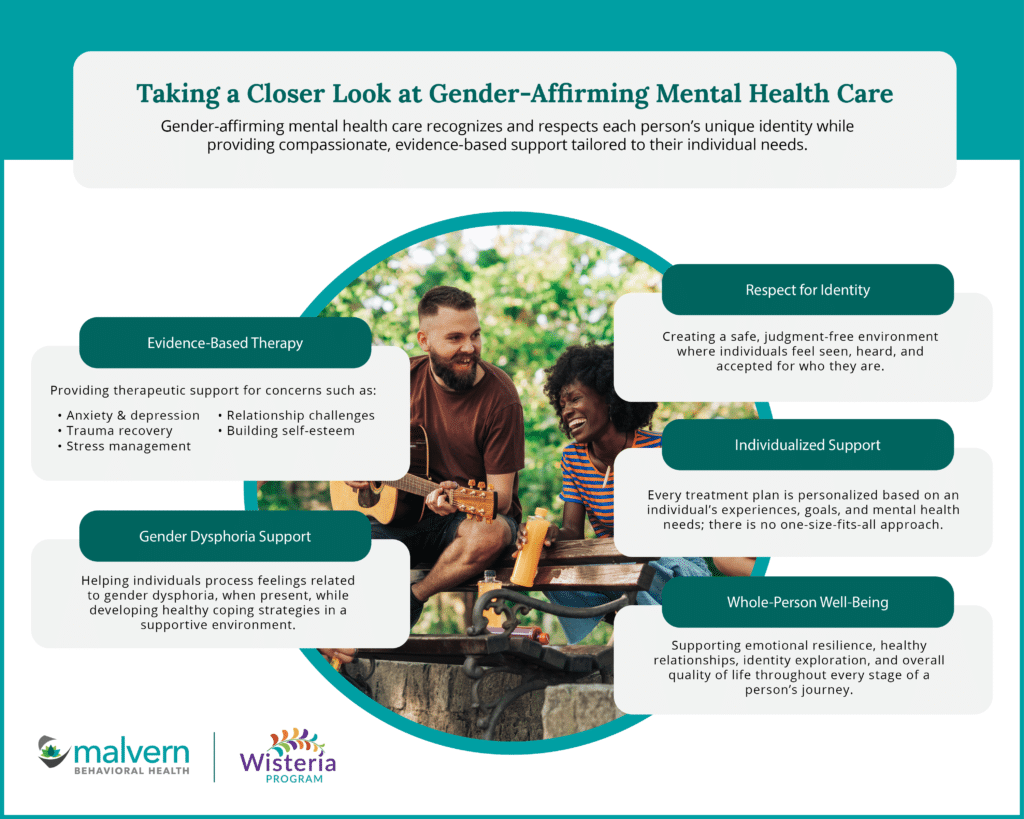
The Importance of Gender-Affirming Mental Health Care
Gender-affirming care (GAC) aligns an individual’s physical, social, and emotional traits with their gender identity. Studies have shown that doing this significantly reduces high rates of anxiety, depression, and suicidality among transgender and nonbinary individuals.
This type of care not only centers on respecting an individual’s gender identity but also provides evidence-based therapeutic support to improve their emotional well-being. Access to gender-affirming mental health care can lead to 60% lower odds of moderate-to-severe depression as well as 74% lower odds of suicidality in youth.
Note: If anyone is having suicidal thoughts, they should get help immediately. Contact the suicide hotline for assistance (988) or call Malvern Behavioral Health (610-480-8919). We have staff available 24/7 to assist someone feeling depressed or having unsafe thoughts.
This approach does not assume that every transgender person has the same experiences or goals. Instead, therapists work collaboratively with clients to address concerns such as:
- Anxiety and depression
- Trauma recovery
- Relationship challenges
- Identity exploration
- Coping with discrimination
- Building self-esteem
- Stress management
- Navigating life transitions
For some individuals, therapy may also include gender dysphoria support, helping clients process the emotional distress that can occur when someone’s gender identity does not align with their assigned sex at birth. Therapy provides a safe environment to explore these feelings without judgment while developing healthy coping strategies.
Research consistently shows that affirming environments improve mental health outcomes and reduce emotional distress among transgender individuals. Feeling accepted and respected can significantly strengthen resilience and overall quality of life.
Overcoming Trans-Related Stigma
As we mentioned before, much of the emotional burden experienced by transgender individuals does not stem from their identity itself, but from societal attitudes toward gender diversity and the stress of navigating systems that are not always affirming or accessible.
In recent years, there has also been an increase in legislation aimed at restricting or limiting access to gender-affirming care, particularly for transgender youth.
These policy changes can add another layer of uncertainty and barriers to care, making it even more important for families, communities, and providers to understand and address the real-world obstacles trans individuals may face when seeking affirming mental health and medical support.
Overcoming trans-related stigma requires education, empathy, and intentional action from communities, workplaces, schools, and healthcare providers. Below, we broke down some of the most common misconceptions.
Myth: Being transgender is a phase.
Gender identity develops differently for every individual. For many transgender people, their gender identity is an enduring part of who they are.
Myth: Using someone’s chosen name and pronouns isn’t important.
Using a person’s affirmed name and pronouns demonstrates respect and can contribute to feelings of safety, validation, and belonging.
Myth: Mental health concerns are caused by being transgender.
Mental health challenges are more commonly linked to experiences of discrimination, rejection, and chronic stress rather than a person’s gender identity itself.
Overcoming trans-related stigma begins with listening, learning, and treating every individual with dignity. Small actions, such as inclusive language, visible support, and correcting misinformation, can create environments where transgender individuals feel safer seeking help.

7 Ways to Support Trans Mental Well-being
Whether you’re a parent, family member, friend, teacher, mentor, or ally, your support can have a lasting impact on a transgender person’s mental health and well-being. Creating an affirming environment doesn’t require having all the answers; it starts with treating others with respect, compassion, and a willingness to learn.
1. Listen Without Judgment
Create space for open and honest conversations. Allow transgender individuals to share their experiences at their own pace, and avoid making assumptions about their identity or what they need.
2. Respect Names and Pronouns
Using a person’s affirmed name and pronouns demonstrates respect and helps foster trust, validation, and a sense of belonging. Consistently honoring their identity can positively impact their emotional well-being.
3. Create Affirming Environments
Whether at home, school, work, or in the community, encourage inclusive spaces where transgender individuals feel safe, respected, and supported. Address bullying, discrimination, or harmful language when it occurs.
4. Continue Learning
Take time to educate yourself about transgender experiences, gender identity, and the challenges many individuals face. The more informed you are, the better equipped you’ll be to offer meaningful support and help with overcoming trans-related stigma.
5. Encourage Healthy Connections
Support opportunities for transgender individuals to build positive relationships with accepting friends, mentors, peer groups, or community organizations. Strong social support can reduce feelings of isolation and improve overall mental well-being.
6. Encourage Professional Support
If someone is experiencing anxiety, depression, stress, or gender dysphoria, encourage them to seek transgender mental health support from providers who offer gender-affirming mental health care. Access to affirming therapy can help individuals build coping skills, strengthen resilience, and navigate life’s challenges with confidence.
7. Celebrate Authenticity
Recognize milestones, accomplishments, and personal growth. Showing consistent acceptance and encouragement reminds transgender individuals that they are valued, respected, and supported for who they are.
Being an ally does not require having all the answers. It means remaining open to learning and demonstrating ongoing respect.

The Wisteria Program: Gender-Affirming Inpatient Care at Malvern Behavioral Health
For individuals requiring a higher level of support, the Wisteria Program at Malvern Behavioral Health provides an inpatient psychiatric environment where gender-affirming care is embedded into nearly every aspect of treatment, from admission through discharge planning.
Rather than simply being LGBTQ-friendly, Wisteria integrates affirming practices into its clinical model to reduce barriers to care and improve emotional safety for transgender and nonbinary patients.
Key elements of the Wisteria Program include:
- Respect for identity from day one. Patients are addressed by their preferred names and pronouns throughout treatment, helping establish trust and reduce distress in a medical setting, even when legal names must remain in documentation.
- Identity-informed clinical care. Treatment recognizes that mental health concerns may be closely connected to lived experiences of gender identity, including gender dysphoria, discrimination, family rejection, and challenges with social transition.
- Continuity of hormone therapy (HRT). If a patient is already prescribed HRT, treatment continues during hospitalization when clinically appropriate, with support from the hospital pharmacy and coordination with outside providers when needed.
- All-gender rooming and individualized care. Room assignments are based on patient comfort, safety, and preference rather than sex assigned at birth, and personal expression, including clothing and grooming, is supported within clinical guidelines.
- Confidentiality and privacy protections. The program supports patients who may not be “out” in all areas of their lives and prioritizes consent-based information sharing.
- Affirming discharge planning. Care teams connect patients with LGBTQ-affirming outpatient providers, community resources, and ongoing support systems to ensure continuity after discharge.
By integrating these practices into daily inpatient care, Wisteria helps create a more supportive environment for stabilization, healing, and long-term recovery.
Seeking Transgender Mental Health Support
Stress is a part of everyone’s life, and we all experience it differently, but there are times when professional support can be especially beneficial. Knowing when to seek transgender mental health support from a professional is essential in helping individuals develop healthy coping skills before challenges become too overwhelming.
With the help of a professional, individuals can learn the tools for managing stress, processing difficult experiences, and building emotional resilience. Consider seeking transgender mental health support if you or someone you know is experiencing the following:
- Persistent sadness or hopelessness
- Severe anxiety
- Social withdrawal
- Changes in sleep or appetite
- Difficulty functioning at work or school
- Increased irritability
- Feelings of worthlessness
- Thoughts of self-harm or suicide
Note: If anyone is having suicidal thoughts, they should get help immediately. Contact the suicide hotline for assistance (988) or call Malvern Behavioral Health (610-480-8919). We have staff available 24/7 to assist someone feeling depressed or having unsafe thoughts.
Finding Transgender Mental Health Resources
When seeking transgender mental health support, finding affirming providers and supportive communities for long-term wellness is also an important step.
These resources can provide emotional support, practical guidance, and opportunities to connect with others who share similar experiences. Some helpful transgender mental health resources may include:
- Licensed therapists experienced in gender-affirming care
- LGBTQIA+ community centers
- Peer support groups
- Crisis support services
- Family education programs
- School counseling resources
- Community advocacy organizations
Creating Inclusive Communities For Everyone
Transgender mental health support goes beyond the responsibility of mental health professionals. Families, educators, employers, healthcare providers, and peers all contribute to creating environments where transgender individuals feel safe and valued.
When we promote empathy, understanding, and belonging, we not only benefit transgender individuals but also entire communities. Some factors to consider when building inclusive communities may include:
- Fostering respectful communication.
- Promoting equal access to healthcare.
- Providing safe educational environments.
- Encouraging workplace inclusion.
- Reducing discrimination and stigma.
- Building stronger social support networks.

By expanding access to gender-affirming mental health care, reducing stigma, and encouraging supportive relationships, we can help transgender individuals build healthier, more fulfilling lives.
Whether someone is exploring their gender identity, seeking gender dysphoria support, navigating difficult life experiences, or simply looking for someone to talk to, compassionate care can provide hope, healing, and resilience. Breaking down barriers begins with education, empathy, and a commitment to treating every person with dignity.
If you or someone you know is seeking affirming transgender mental health support, contact our team today to see how we can help.