


Navigating a New School Year: Back to School Anxiety Support for Students & Families
For teens and young adults, coming back to school can feel overwhelming. Continue reading to understand the causes and signs of severe school stress, as well as how to seek proper back-to-school anxiety support if needed.
Why Does Going Back to School Cause Anxiety?
Returning to school after a break can bring a mix of excitement and uncertainty. A new year, semester, or schedule often means adjusting to new routines, responsibilities, expectations, and environments—all of which can feel overwhelming.
Back-to-school anxiety is a common experience for students of all ages. While the specific sources of stress may change as students grow, academic pressure, social changes, increased responsibilities, and uncertainty about the future can all contribute to feelings of anxiety and stress.
For some students, the transition back to school may bring temporary nerves that ease as they settle into a routine. For others, these feelings can become more persistent or interfere with everyday life. Understanding what may be contributing to a student’s anxiety can make it easier to recognize when they may need additional support.
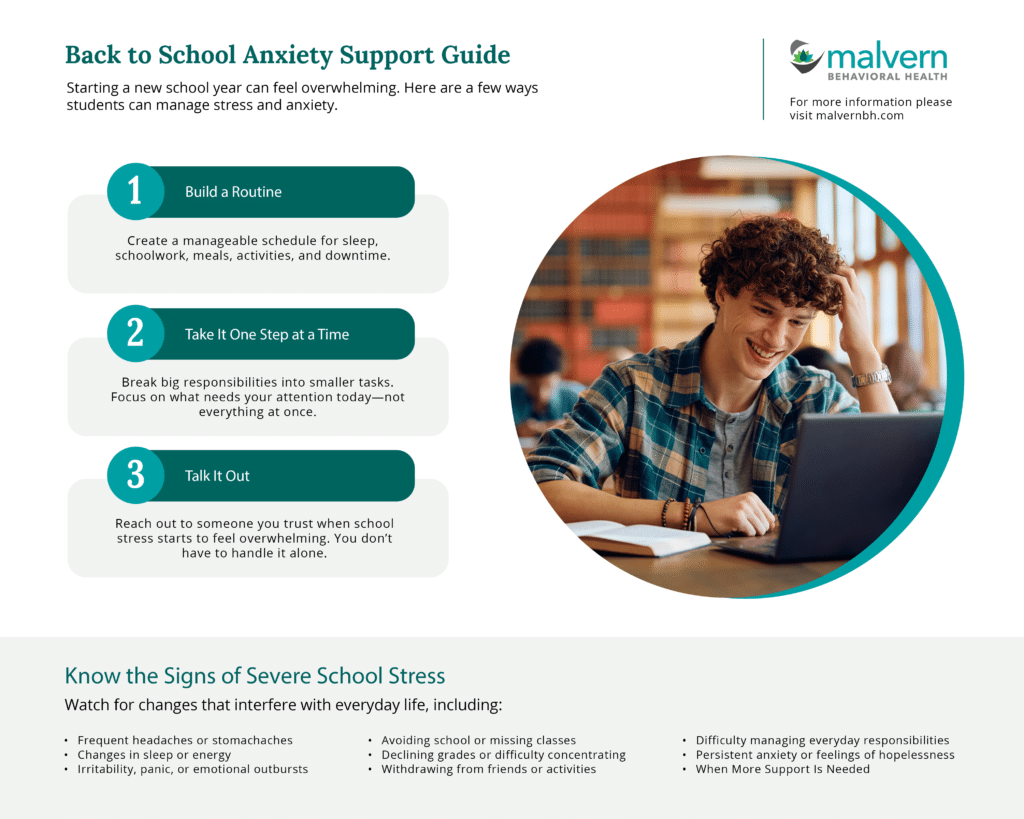
Signs of Severe School Stress
Some stress is a normal part of life, and it can’t be avoided. However, when anxiety and worry become persistent, overwhelming, or begin to interfere with daily life, it may be a sign that you need additional support.
Some signs of severe school stress may include:
Physical Symptoms
Frequent or unexplained headaches, stomachaches, nausea, fatigue, or significant changes in sleep, particularly around school days.
Emotional or Behavioral Changes
Increased irritability, frequent crying, emotional outbursts, panic attacks, or reactions that seem disproportionate to everyday challenges.
School Avoidance
Reluctance to attend school, skipping classes, frequent requests to stay home, or increasing absences.
Academic Changes
A sudden decline in grades, missed assignments, difficulty concentrating, or intense distress over academic performance.
Social Withdrawal
Pulling away from friends, family, extracurricular activities, or campus life and losing interest in activities they once enjoyed.
Difficulty Managing Daily Responsibilities
Struggling to keep up with schoolwork, work, extracurricular commitments, self-care, or other everyday responsibilities.
Increased Substance Use
Turning to alcohol or other substances as a way to cope with academic, social, or emotional stress.
Persistent Feelings of Anxiety or Hopelessness
Experiencing ongoing anxiety, emotional numbness, feelings of hopelessness, or intense fears about school, relationships, finances, or the future.

Back to School Anxiety Support: 3 Strategies That Can Help
Teen and young adult anxiety treatment can look different for everyone. Whether you’re experiencing high school transition anxiety or managing college stress and anxiety, these back-to-school anxiety support strategies can help you practice healthy coping mechanisms from the first day to the last.
1. Establish a Routine You Can Maintain
Going back to school often comes with a new schedule, responsibilities, and commitments. A routine isn’t about filling every minute of your day. It’s about creating enough structure to make your days feel a little more predictable. One of the best back-to-school anxiety support strategies is establishing a manageable routine to follow daily.
For Teens
- Consistent Sleep: Aim for a regular bedtime and wake-up time, even on weekends when possible.
- Morning Preparation: Pack your bag, choose your clothes, or prepare breakfast the night before to make mornings less stressful.
- Homework Time: Set aside a regular time and place for schoolwork so assignments don’t pile up.
- Time to Unwind: Make room for activities you enjoy, whether that’s sports, music, hobbies, or spending time with friends.
- Downtime Without Guilt: Remember that taking a break helps maintain your energy, not something you have to earn after finishing everything.
For College Students
- Sleep and Meals: Keep consistent sleep and meal times as much as possible, even when your schedule changes.
- Class and Study Time: Use your syllabus or calendar to plan rather than waiting until assignments are due.
- Work and Other Responsibilities: Build your job, internship, extracurriculars, or other commitments into your schedule so you know what you realistically have time for.
- Movement and Downtime: Make time for exercise, hobbies, social activities, or relaxing.
- Flexibility: Leave some room in your schedule for unexpected responsibilities or days when you need to slow down.

2. Break Up Big Priorities Into Smaller Tasks
When anxiety makes everything feel urgent, narrowing your focus can help you feel more grounded and in control. Back-to-school anxiety support isn’t about solving every problem at once; sometimes the next small step is enough.
For Teens
- School Year: Rather than worrying about the whole year, focus on getting through one day at a time.
- Workload: Choose one assignment or subject to focus on instead of thinking about everything you need to complete.
- Social Situations: Set small goals like saying hello to someone new or sitting with a classmate at lunch.
- Academic Concerns: If a subject or class feels overwhelming, identify one question you can ask your teacher rather than worrying about falling behind.
- Daily Routine: Focus on getting through one day at a time instead of trying to plan everything at once.
For College Students
- Coursework: Start with the assignment that is due next instead of thinking about everything on your syllabus.
- Schedule: Focus on getting through one day’s classes and responsibilities at a time rather than the entire semester.
- Independence: Take one decision at a time, whether that’s planning meals, managing your schedule, or handling a new responsibility.
- Social Life: Give yourself a small goal, such as attending one campus event or introducing yourself to someone in class.
- Future Plans: Instead of trying to figure out your entire career or life after graduation, focus on the next decision in front of you.

3. Talk to Someone You Trust
Asking for help doesn’t mean you can’t handle school. It means you’re recognizing when you could use extra support. Don’t wait until things become too overwhelming to talk to someone. If you feel worried, anxious, or stressed, seek back-to-school anxiety support by reaching out to someone you trust.
For Teens
- A Parent or Caregiver: Let them know when school stress feels like more than you can handle on your own.
- A School Counselor or Administrator: They can help you work through academic, social, or emotional concerns.
- A Teacher or Coach: If a particular class, activity, or situation is contributing to your stress, someone who knows you at school or through extracurricular activities may be able to help.
- A Close Friend or Classmate: Knowing someone your age understands what you’re going through can help you feel less alone.
- Another Trusted Adult: A relative, mentor, or other adult in your life can provide another source of support.
For College Students
- A Friend or Roommate: You don’t have to handle a difficult day by yourself. Sometimes, having someone nearby who can listen can make a big difference.
- A Professor or Academic Advisor: If academic pressure contributes to your anxiety, they can help you identify your options.
- A Resident Advisor: If you’re struggling with college life or adjusting to living on campus, RAs are useful first points of contact.
- A Campus Counselor: College counseling services can provide a space to talk through anxiety, stress, and other challenges.
- A Parent, Guardian, or Family Member: Moving away doesn’t mean you have to stop relying on the people who have supported you. Reaching out to someone from home can often bring you comfort.
- A Mental Health Professional: If anxiety persists or interferes with your everyday life, professional support may be an important next step.

Benefits of Therapy For School Anxiety
Participating in therapy for school anxiety with a mental health professional is also beneficial in addition to the strategies mentioned above. Malvern Behavioral Health offers teen and young adult anxiety treatment programs that address the unique challenges within these age groups.
Mental health support for adolescents and young adults offers many benefits, from improved academic performance and emotional resilience to building stronger connections and reducing stigma.
Providing students with accessible mental health resources is one of many ways we can normalize talking about mental health and reassure students that seeking help early is the best way to combat anxiety.
Looking for more information about teen and young adult anxiety treatment? Contact our team to see how we can help.